
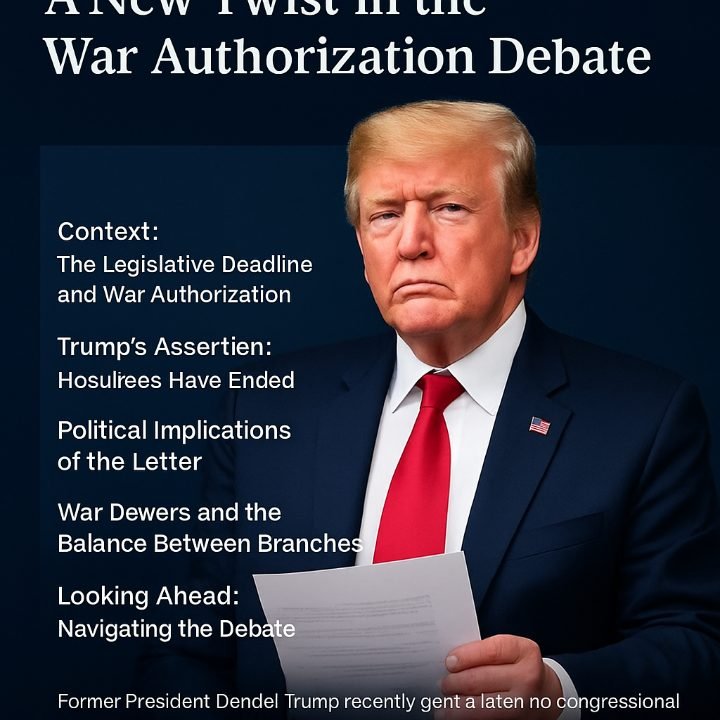
Trump’s Letter on Iran Hostilities: A New Twist in the War Authorization Debate
Former President Donald Trump recently sent a letter to congressional leaders asserting that hostilities in Iran have ended. This statement arrives amid a contentious legislative deadline concerning war authorization, a deadline that Democrats have opposed. The letter’s timing and content introduce a complex dynamic into the ongoing debate over U.S. military involvement in Iran and the constitutional balance of war powers between the executive and legislative branches.
Context: The Legislative Deadline and War Authorization
Congress has been grappling with how to manage and oversee U.S. military actions abroad, particularly in Iran. A legislative deadline is in place that requires the executive branch to seek congressional approval for continued military engagement. This deadline reflects broader concerns over unchecked executive authority in deploying armed forces without clear legislative consent.
Democrats have voiced opposition to extending or modifying war authorization measures that would allow prolonged military involvement in Iran without stricter congressional oversight. Their stance underscores a commitment to reinforcing the constitutional role of Congress in decisions of war and peace.
Trump’s Assertion: Hostilities Have Ended
In his letter, Trump claims that hostilities in Iran have ceased. This assertion, if accepted, could have significant implications for the legislative process. By framing the conflict as concluded, the letter challenges the necessity of maintaining or renewing war authorizations tied to ongoing hostilities.
This position complicates the debate by potentially undercutting the legislative rationale for imposing or extending deadlines on military action. If hostilities are indeed over, the argument for urgent congressional intervention or authorization weakens, shifting the focus toward post-conflict policy and diplomatic engagement.
Political Implications of the Letter
The letter’s impact extends beyond procedural concerns into the political arena. It places congressional leaders, particularly Democrats, in a difficult position. Accepting the letter’s premise might require recalibrating their opposition to war authorizations or shifting their strategy toward oversight of post-conflict developments.
Conversely, rejecting the letter’s claim could deepen partisan divides and fuel criticism of the former president’s influence on current foreign policy debates. The letter also highlights ongoing tensions between the executive and legislative branches over control of military decisions, a constitutional issue that has persisted across administrations.
War Powers and the Balance Between Branches
The dispute over Iran and war authorization is emblematic of a broader constitutional question: how to balance war powers between the president and Congress. The U.S. Constitution grants Congress the authority to declare war, while the president serves as commander-in-chief, responsible for directing military operations.
Trump’s letter introduces a new element into this balance by asserting a change in the status of hostilities without a clear, formal resolution from Congress. This move raises questions about the executive branch’s ability to influence or circumvent legislative war powers through unilateral declarations.
Such actions can prompt debates about the limits of executive authority in foreign conflicts and the mechanisms Congress can employ to assert its constitutional role. The ongoing situation with Iran serves as a test case for how these powers are negotiated in practice.
Looking Ahead: Navigating the Debate
The letter from former President Trump adds complexity to an already fraught debate over U.S. military involvement in Iran. Congressional leaders must weigh the implications of his assertion against their legislative responsibilities and political considerations.
As discussions continue, the interplay between executive statements and legislative deadlines will remain a critical factor in shaping U.S. policy toward Iran. The situation underscores the enduring challenge of maintaining a constitutional balance of power in matters of war and peace.